The Chester Civic Trust has given its verdict on the best examples of new development, renovation of existing buildings and community projects in its annual awards for the city, previously known as the ‘Good, Bad and Ugly’. The awards now celebrate the Good, recognise improvement and bring attention to the bad.
Now in its 20th year, the awards were made at a recent ceremony at the headquarters of Chester Civic Trust at Bishop Lloyd’s Palace Watergate Street, Chester.
These awards are presented annually and with the help of members the Trust aims to:
- recognise progress and change over the past twelve months,
- encourage high standards in the built environment (urban and rural),
- recognise achievements that may not feature in a more formal award scheme, and
- recognise the work of local groups, individuals and firms alike.
Peter Hadfield, chairman of the judging panel, said: “Two main themes emerged this year, in the Good category it was the tremendous work done by volunteers in and around Chester whilst in the Bad category it was poor first impressions at Gateways to the City.”
Members of the Chester Civic Trust (CCT) made 49 nominations; 24 Good nominations, 6 improved and 19 bad.
He added; “As always, I would like to thank my fellow Judges for their time and commitment visiting and providing insightful comments on the nominations; Chloe Sheward, Paul Fielding, Steve Wright, Geoff Clifton and Philip Harrison.”
The Chair’s Special Award
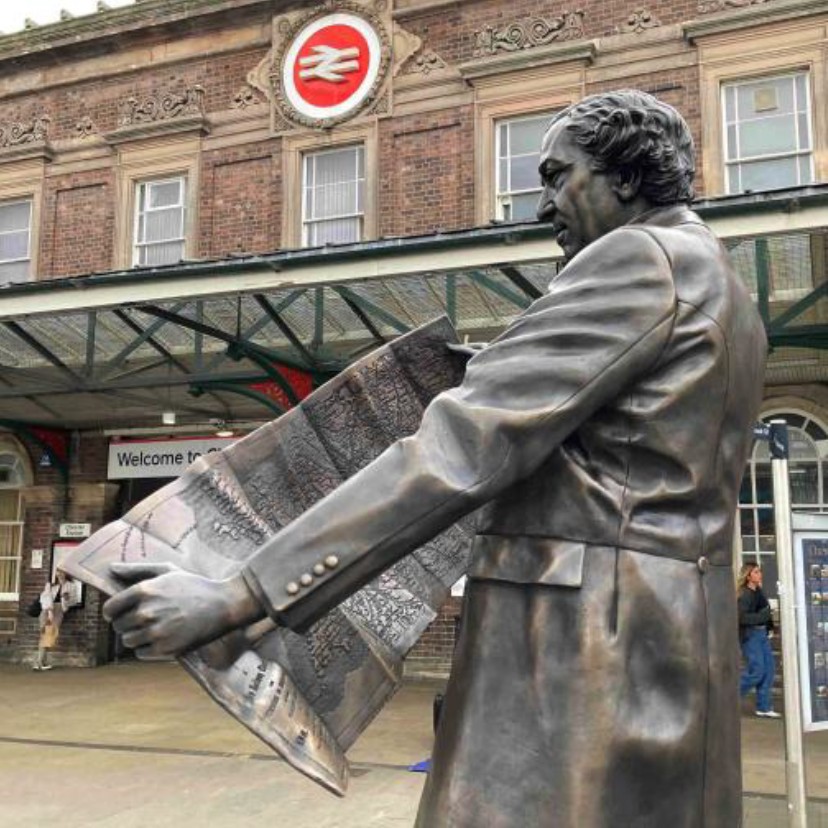
The Thomas Brassey Statue
The Thomas Brassey Society educates the public about Thomas Brassey and his amazing achievements with talks, publicity material, exhibitions, educational publications, sponsorship of a children’s book and supporting other societies with links to Thomas Brassey, both in the UK and in Europe. In particular CCT members wanted to recognise the society’s work which culminated in the erection of a bronze statue outside Chester Station in the city of his birth, alongside the interpretation panel already in situ to ensure his legacy is not forgotten.
The Good Awards
Watergate Row Stallboards
The stallboards are an important aspect of the Rows system and it is good to see the stallboards being refurbished. Many stallboards have been cleaned and reoiled along with minor repairs while others are completely replaced with new timber. Where replacement takes place, this uses responsibly sourced oak from nearby sawmills. The operation is significantly improving the appearance of the Row walkway and helping to maintain these important features.
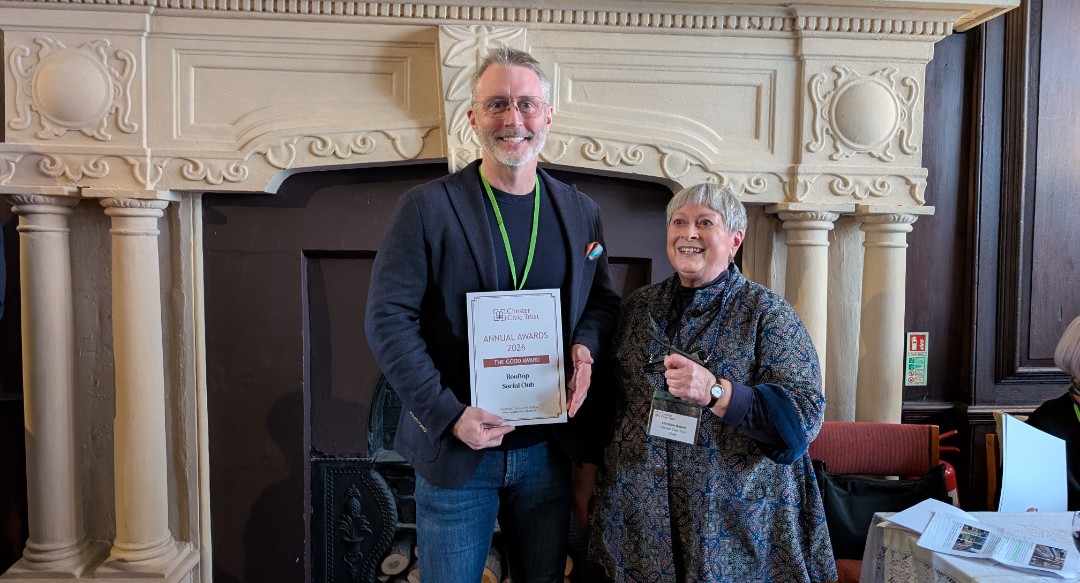
Rooftop Social Club
The refurbishment of the top two floors of a car park to create Rooftop Social Club has created a space for family groups of all ages, including teenagers to gather and socialise – offering games of all sorts and a safe space for them alongside adults. Whilst the idea was opposed by many, Ian Gordon has kept his promises to effectively manage noise, privacy and anti-social behaviour, to the extent that even the most vociferous opponents are now admitting that they got it wrong. In summary, a welcome addition to Chester.
The Queens Garden Hoole
The garden was created in memory of the late Queen Elizabeth by a group of dedicated people from the local community (our second nomination for volunteers). The local council and MP have also been supportive.
They have worked hard to create something very special and beautiful in a forgotten corner of their neighbourhood, for everyone to enjoy. These volunteers have created flower beds, and erected seating for people to sit and relax and admire the planting. The group also hold community events such as a VE day party, and there is now an annual Christmas party with a ‘lights switch on’.
Floral Displays
What a difference it makes to have floral displays around the City. There were three nominations for the Amphitheatre, Moules a Go-Go and Old Harkers Arms. Comments included ‘an absolute delight, it raised my spirits’ and ‘walking past in summer felt just joyful’.
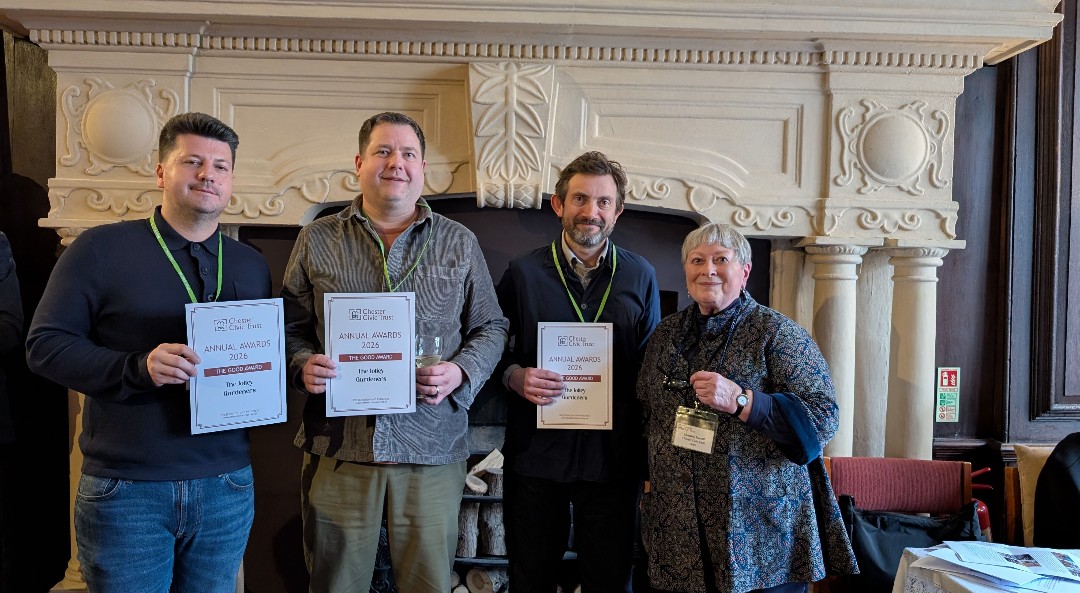
The Jolly Gardeners
The project began with careful research into the pub’s history, original structure, and previous alterations. The approach adopted was not to recreate the past, but to sensitively peel back the years, revealing the character that had been hiding beneath. Working closely with local craftspeople and conservation officers, the team retained and restored original features wherever possible (exposed brickwork, timber beams, sash windows, and even fragments of tiled flooring were lovingly brought back to life). Where new interventions were needed, the design is honest and contemporary, using natural materials that complement the original architecture. Throughout the building, the emphasis is on texture, light, and local provenance from the handcrafted joinery to the reclaimed furnishings and locally sourced fittings. The result is a delightful local pub and restaurant.
History of Chester on the Internet – Peter Elliott and Steven Howe
There cannot be many cities in England, which has so much public information on its history as Chester. This is due to the work of Peter Elliott and Steve Howe. Both have set up sites on the internet that are brimming with historical facts on Chester. They are used by local people, visitors and researchers. They have created an informed appreciation of our city.
Peter Elliott began Chesterwiki which is focussed on historical information. It is a huge site, giving information on topics as varied as cheese to Brutalism in the city. It has in depth explorations on areas such as available eBooks on the city and historical maps.
Steve Howe began his site in 1995. It is equally full of general historical information and images of Chester. Its huge range can be seen in its Index. It begins from a different premise to Chesterwiki. It is primarily organised around ‘a very delectable walk’ around the walls. The site is named A Virtual Stroll Around the Walls. This is somewhat misleading. Steve pushes far more than this into his site. He will also reveal his own opinions.
Sadly, Peter died in 2025. He had given Chester Civic Trust huge support in exploring the carvings on Bishop Lloyd’s Palace. His death reveals the problem of the existence of important internet domains when the writer is no longer unable to sustain them.
The Good Commendations
All the awards in this category go to volunteers or volunteer groups.
The Steering Group of the Cheshire West Design Awards 2025 (CWDA)
These awards are nearly 50 years old and returned for the eleventh time in 2025 rebranded as Cheshire West Design Awards (formerly Civic Awards for Design and Conservation). The aim of these awards is to make Cheshire West and Chester a better place to live, work and visit by encouraging outstanding design and projects, and gaining national recognition for this. Led by volunteers and supported by Cheshire West and Chester, Chester Civic Trust and Cheshire Society of Architects the group works hard to identify appropriate projects and arrange a fantastic presentation event and brochure.
Opening of the Shot Tower for Heritage Open Days (HOD)
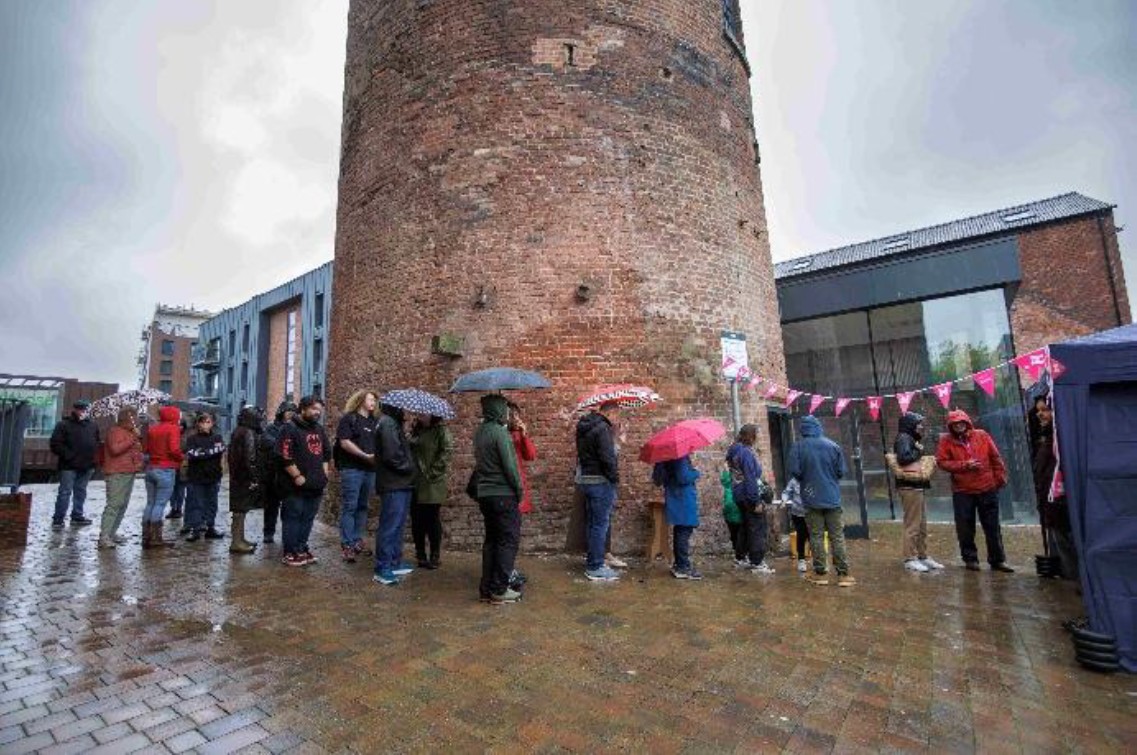
For the annual national Heritage Open Days in September 2025, the HODs organisers opened the tower with a team of volunteers led by local historian and industrial archaeology enthusiast Stewart Shuttleworth to explain the significance of the site. It is understood that this was Stewart’s suggestion; his team included a former employee from the Leadworks. The day that the tower opened was a very wet day, but despite that 426 people visited the building. Opening a building that is not normally accessible to the public is in the true spirit of HODs; the teamwork between Stewart Shuttleworth, the volunteers and the local HODs organisers is commendable. Events like this help to remind people that Chester has important industrial heritage.
The Dingle Information Boards
The Curzon Park Residents’ Association has installed a series of interpretation boards as part of ‘The Dingle Project’. These boards provide interesting historical and environmental information about the woodland area.
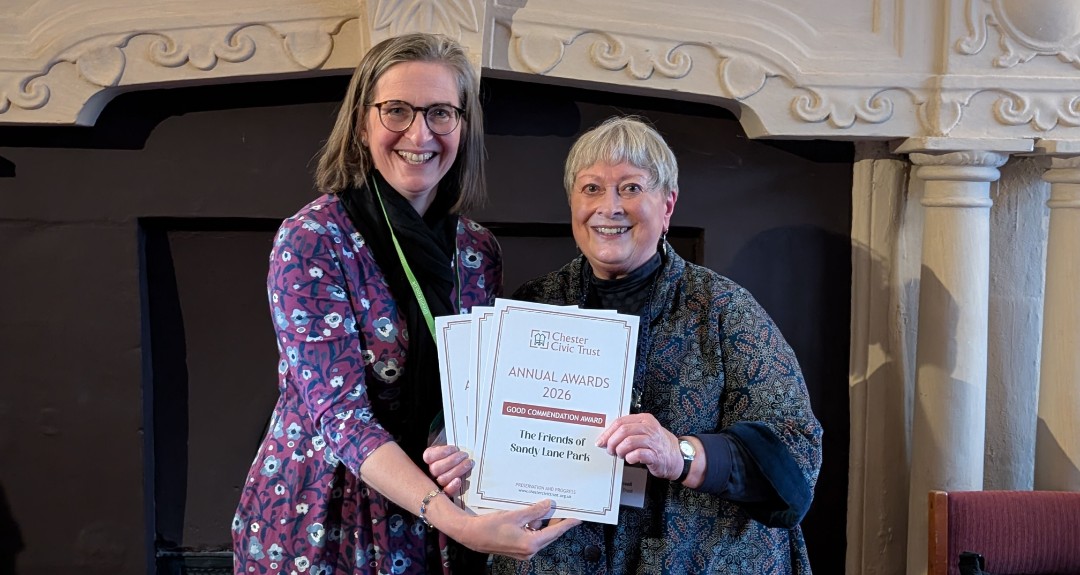
Sandy Lane Park
The Friends of Sandy Lane Park have been clearing pathways, painting benches and planting bulbs. They commissioned local artist Nikki Pinder to create a colourful mural to decorate the steps and supported the installation of a new contactless bird feeder at the waterfront and a defibrillator at Sandy Lane Garage. They have recently obtained funding from Severn Trent to kick start more projects. This is a great community initiative.
The Improvement Awards
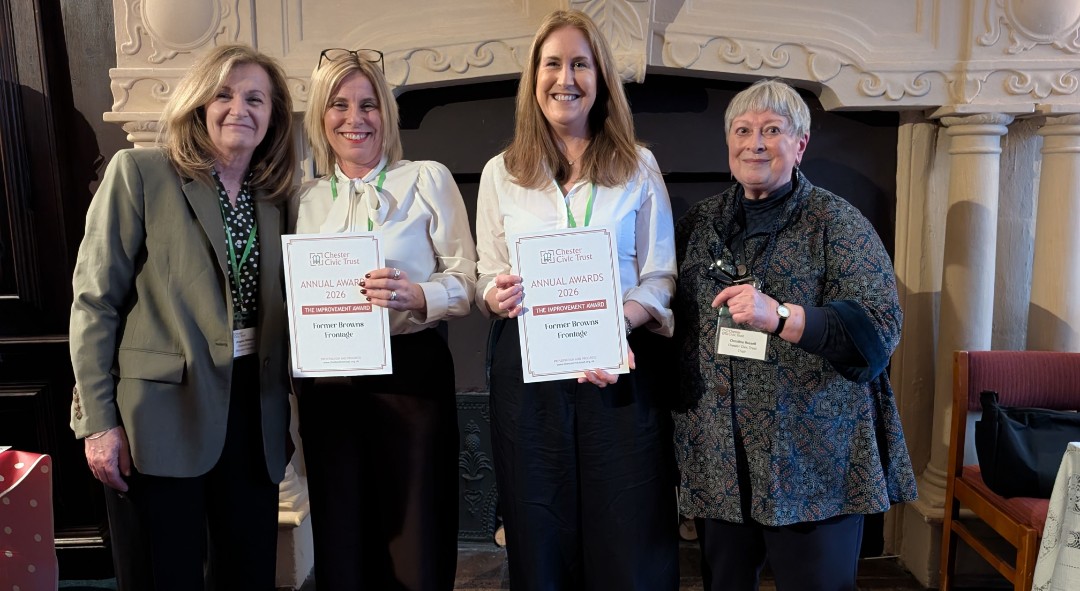
Former Browns Frontage
After years of neglect and a shabby, somewhat derelict, appearance on what is arguably Chester’s principal street, this building has finally been given the make-over it deserves. This is part of preparation of the opening of Harrod’s Beauty in this former Browns of Chester building. So Harrod’s Beauty won’t just be transforming the appearance of Cestrians and visitors but have also provided a welcome face-lift to the frontage of the former store (and Chester institution) that what was once dubbed, ironically, the Harrod’s of the North!
35 Eastgate Street
It is good to see that this façade has been renovated, it includes carvings of St George slaying the dragon and a liver bird (this building having been a branch of the Bank of Liverpool) on the half-timbering. This building is part of a development by John Douglas in the 1890s. With recent renovations along Douglas’s eastern side of St Werburgh Street and to 37 Eastgate Street these half-timber vernacular revival buildings look stunning. Their details are now better defined and more visible. The view of the corner of the eastern side St Werburgh Street with Eastgate Street has been enhanced with this renovation. This helps to highlight the importance of the abundant black & white architecture initiated by the Victorians as part of Chester’s distinctive townscape.
City Walls Stabilisation
It is good to see that the repairs to City Walls at the collapsed section has reached a significant milestone, the completion of Stage 1 stabilisation works. We now look forward to Stage 2 of the project which involves a series of carefully planned intrusive investigations.
This phase is particularly complex, as it includes carrying out trial pits and ground investigation works both adjacent to the City Walls and within the inner core. These activities are essential to fully understand the condition of the structure, the form of the wall construction and the ground conditions. This will enable an appropriate and robust design solution to be developed during the next stage.
It is estimated that Stage 2 will be completed towards the middle of 2026. Hopefully full repairs will then proceed rapidly.
The Bad Awards
As previously mentioned, the main theme of the Bad Awards is the poor first impressions at Gateways to the City.
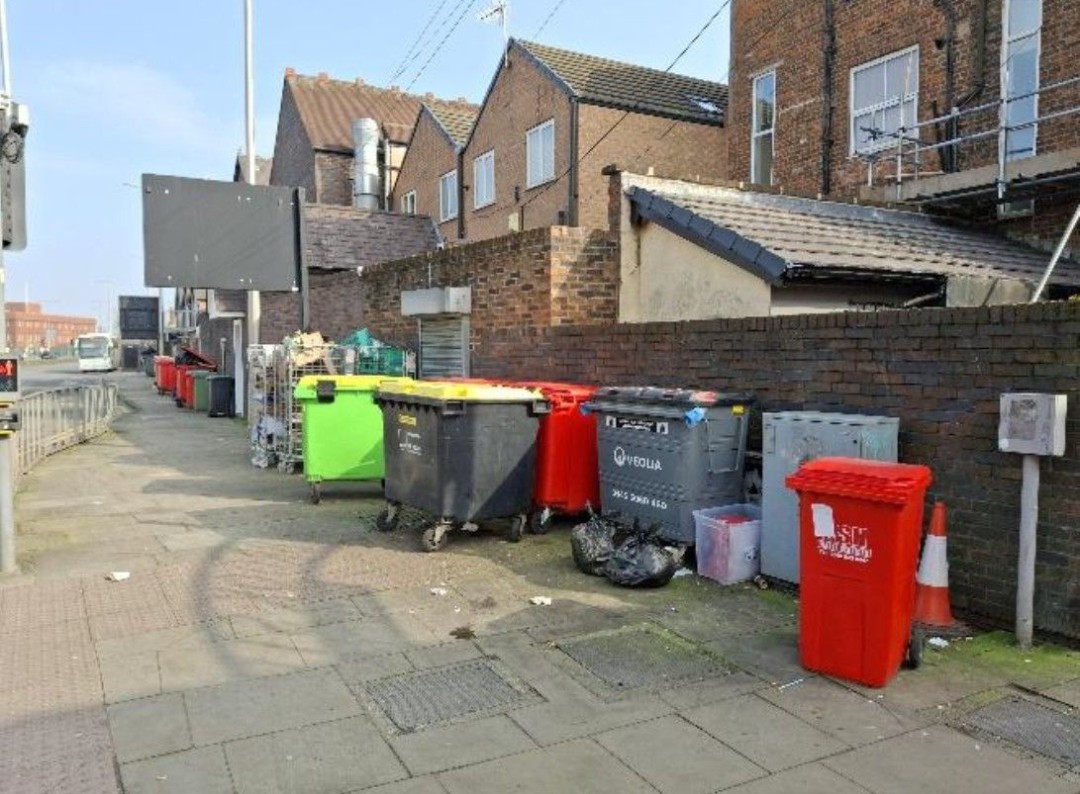
The Entry to the City along Hoole Way
As you drive along Hoole Way into Chester you pass the rear of properties on Brook Street many of which use this area for storage of their waste bins creating an untidy and uncared atmosphere. This is an important gateway into Chester and deserves a scheme to improve its appearance.
City Forest Garden
Conceived in 2016-17 by Forest City Projects CIC this was a brilliant concept to provide a wildlife-friendly space in Chester in what was a grim, grey, rundown concrete entity created as part of the construction of the Inner Ring Road. The City Forest Garden project involved lots of community involvement and fund raising. It was implemented over 2019 including the installation of intriguing metallic super-trees. A fantastic award-winning achievement.
Sadly, in the last few years maintenance seems to have lapsed and what should be a delightful space now feels neglected, little used and unappreciated. Sad really as it has so much potential for community wellbeing, learning and nature.
The Fountains Roundabout
The Fountains Roundabout is a key transport node and entry point into the city. It is part of the Inner Ring Road which was opened in sections between 1966 and 1972 and connects with Upper Northgate Street and thence the City Centre, Liverpool Road and Parkgate Road. The Fountains Roundabout is so named because it was designed with fountains, these large jets of water operated for decades. They used to enliven the space here and it seems a pity that they are no longer there. Arguably, they are also part of Chester’s 20th century heritage.
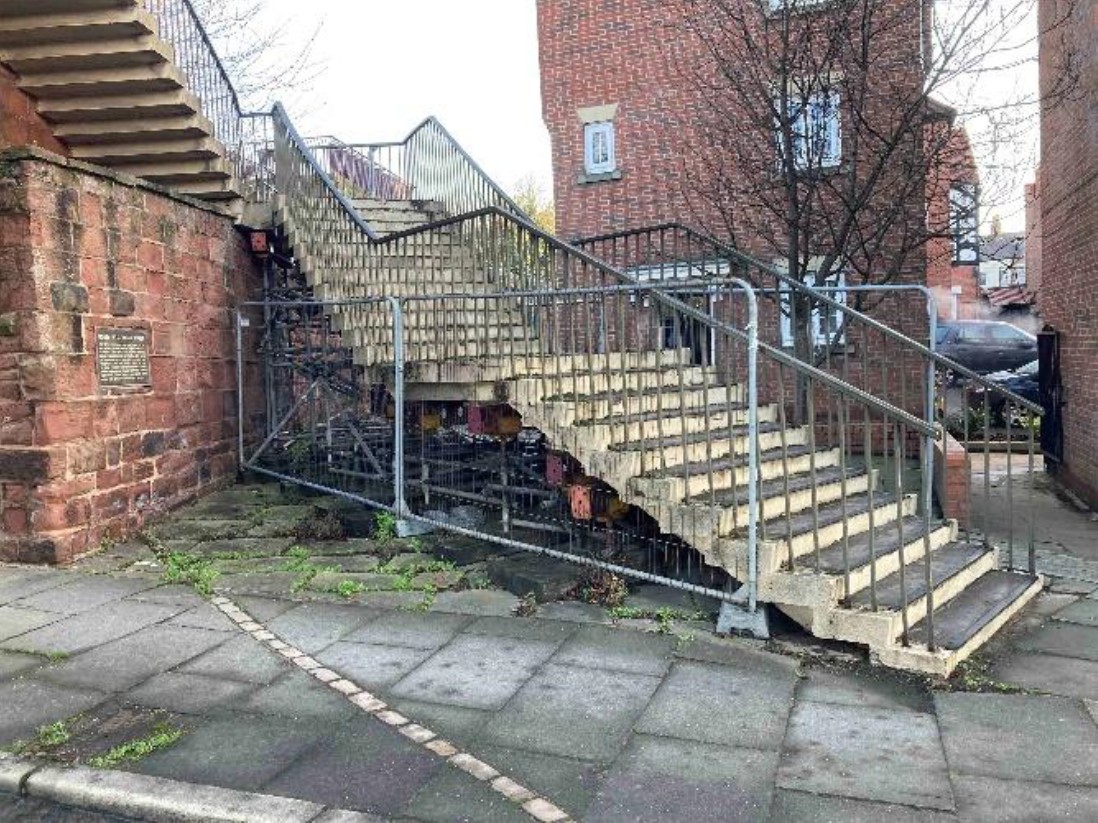
St Martins Gate
The steps on either side of St Martin’s Gate have been propped up for many years providing an image of neglect and a sense of lack of maintenance. They are viewed from both the City Walls and the Inner Ring Road. The gate is a prominent feature and part of Chester’s 20th century heritage. On the western side there is a plaque adjacent to the steps informing readers that the gate and viaduct beyond were opened by Babara Castle in 1966 (then Minister of Transport). Furthermore, and significantly, the steps on the eastern side have a sweep that approximates to that of the rounded north-eastern angle of the Roman fortress, which is also marked out in the pavement below the steps but largely hidden by security fencing, scaffolding and supports.
Fontessa House, Upper Northgate Street
This building once housed student accommodation but has been empty and boarded up for some time. It feels such a waste for such a building to not be in use. It also occupies a prominent site near to Fountains Roundabout and the Inner Ring Road and near to the junction with Parkgate Road (leading to the university and retail parks) and Liverpool Road (leading to the Countess of Chester Hospital) and so does not present a good image to passers-by in terms of economic activity.
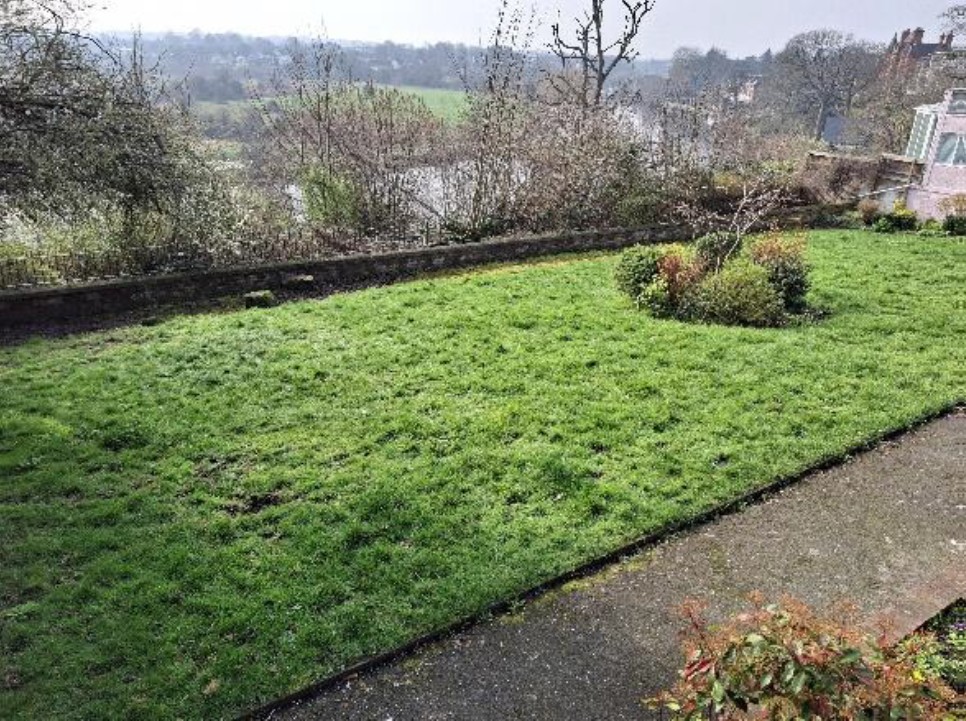
Richmond Garden, Boughton
Walking along the busy dual carriageway into the City is not pleasant so the opportunity to walk around or sit in this garden to enjoy the view across to The Meadows should provide a short respite. Unfortunately, the garden is badly maintained, overgrown and looks very unkempt so that it is virtually unused except by vagrants.
Tower Wharf
Tower Wharf was intended to comprise a mixed-use regeneration scheme, with retail/restaurant/office accommodation at ground floor with apartments on the upper levels. The ground floor units were designed to have active south-west facing frontages enlivening the area with a mix of different uses, all surrounding a picturesque canal basin. Clearly there is no demand for them, and they should now be converted to a different use.
 The Chester blog