Designs for the creation of a rare wetland habitat in Chester have been granted planning permission by Cheshire West and Chester Council.
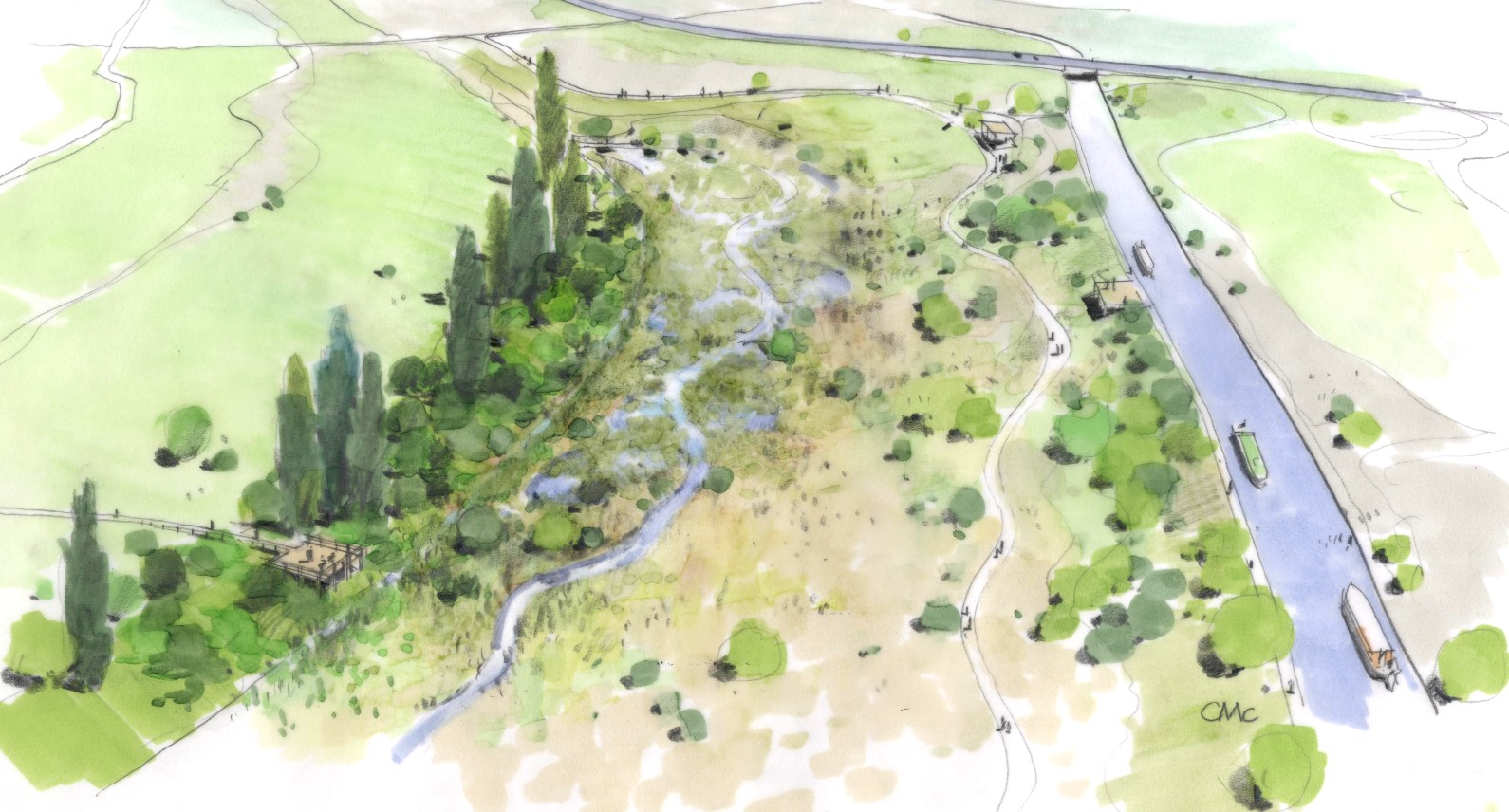
The scheme will create a 23-hectare site in and around the popular Countess of Chester Country Park (CoCCP) in the city.
A mosaic of wetland habitats such as, reedbeds, shallow pools, treatment wetlands and a wet meadow will help remove water pollution, protect flood-prone paths and increase the wildlife in the area.
Called the Chester Wetland, the project is the brainchild of Chester-based wetland scientist, Professor Christian Dunn, and Andy Scargill, the chair of the CoCCP Friends group.
Professor Dunn, who works at Bangor University, said: “As all the best ideas do – this one started in a pub in 2020, and has grown into something real because of a remarkable team effort and the support of some fantastic organisations and individuals.
“Now that we have planning permission we will be able to create a glorious wetland habitat including a wet meadow – which are now very rare in the UK – for the people of Chester to enjoy.
“As a wetland scientist at Bangor University I’m hoping this project helps people understand how important wetlands are not just for wildlife and our country’s infrastructure, as Nature-based Solutions, but also our own health and wellbeing – it’s no surprise they’re often called nature’s superheroes!”
So far, the planning and development of the Chester Wetland has been supported by over £322,000 of funding from the Environment Agency in partnership with Cheshire West and Chester Council and The Land Trust to cover designs, surveys and modelling.
Additional data and surveying has been done by students from Bangor University.
The Networks for Nature initiative, led by Chester Zoo and funded by National Lottery Heritage Fund, has granted the project £250,000 and a further £500,000 has been secured through various biodiversity creation sources of funding by the local authority.
Mr Scargill, Chair of the park’s Friends group said: “This is going to be a brilliant addition to the park now we have planning permission.
“It’s going to turn a rather underused area of the park into something very special for local people to enjoy for generations.
“Creating the Chester Wetland isn’t going to be done overnight so we’ll keep park-users and the public up-to-date as we go along.”
Matt Clegg, Environment Director at locally-based business Binnies UK, who developed the plans for the wetland, said: “As someone who lives in Chester and uses the park it has been a pleasure to work on the designs for such an exciting project.
“The scheme balances habitat creation, water treatment and community access in a way that will deliver long-term benefit – it’s going to be very special.”
Hannah Brooks, Senior Community Participation Manager at Chester Zoo praised the project, saying: “We’re working with communities and partners across Chester and Ellesmere Port, as part of our Networks for Nature initiative, to create a thriving landscape for both people and wildlife across the wider region.
“We’re really excited that the Chester Wetland will form part of this project as a vital habitat for UK native species to thrive, while also being a wonderful space for people to enjoy.
“The National Lottery Heritage funding which is supporting this project will enable The Land Trust to install look out spots so that visitors to the area will see the wading birds, swooping dragonflies and the wide range of wetland plants up close.”
Giving his support, Mark Easedale, Area Environment Manager at the Environment Agency, said: “By providing funding alongside technical support, we’re pleased to help in the delivery of a project that improves water quality, creates valuable wetland habitat and better connects the people of Chester with nature.”
Alan Carter, Chief Executive at the Land Trust said: “The Land Trust is delighted at this important step closer to us starting work on the Chester Wetland project. The new and improved wetland habitats will provide real benefits to biodiversity and the planned visitor infrastructure will improve access and enjoyment for visitors from across the local communities.”
It is hoped that ground work will start on the site in Summer 2027.
 The Chester blog