Review: The Wild, Heartbreaking Story of Wales’ Most Extraordinary Aristocrat
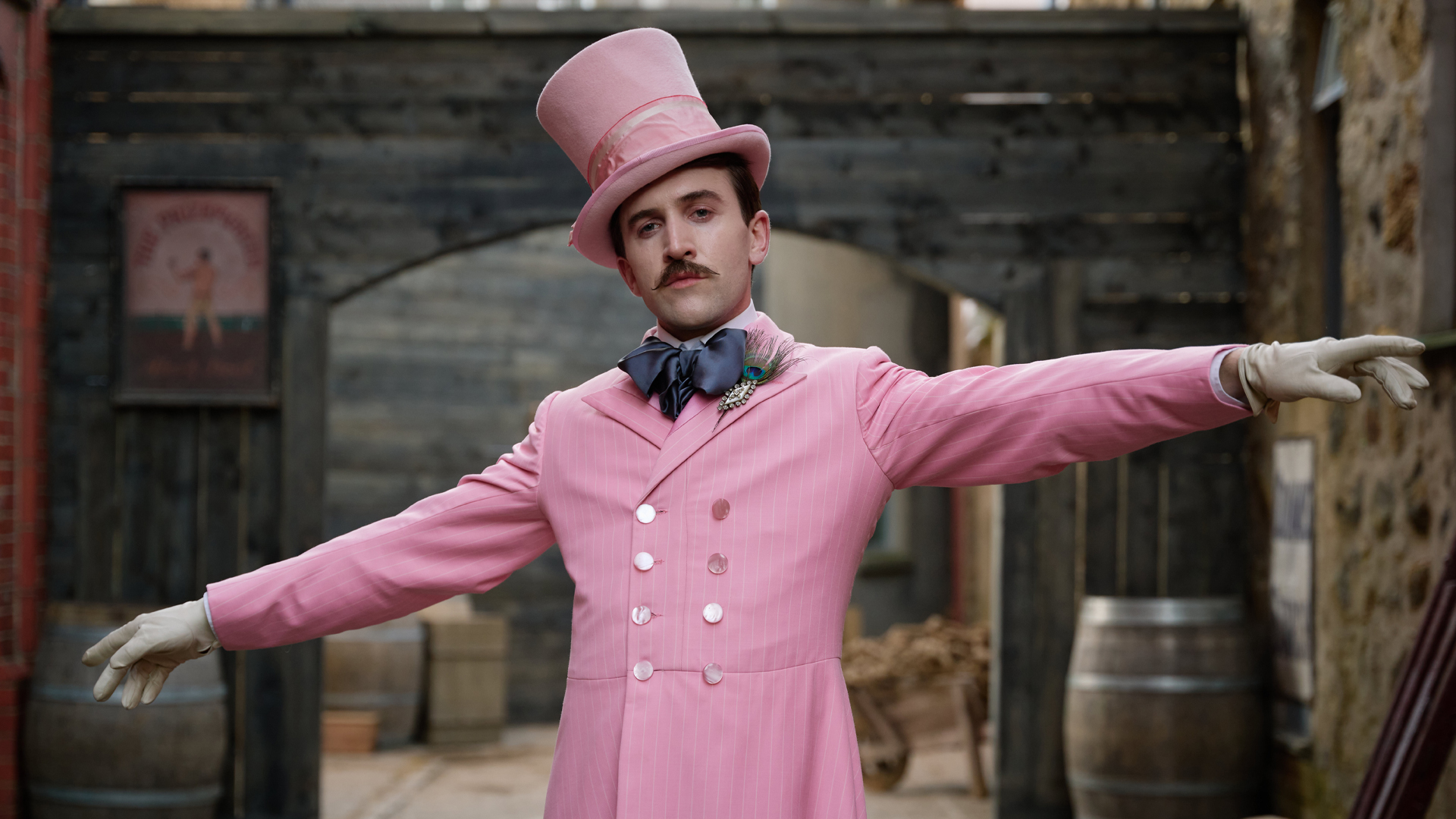
I went into Madfabulous knowing very little about Henry Paget, the 5th Marquess of Anglesey, beyond the reputation that has followed him through history: extravagant, flamboyant, scandalous, and ultimately responsible for squandering a vast family fortune. What I wasn’t expecting was to leave feeling genuinely moved by his story.
Rather than treating Henry as a historical curiosity, Madfabulous presents him as a complex and deeply human figure. Beneath the lavish costumes, theatrical performances, and headline-grabbing excess is a lonely young man searching for acceptance in a world that never quite understood him.
Callum Scott Howells gives a remarkable performance in the title role. He captures both Henry’s larger-than-life charisma and his vulnerability, making it impossible to dismiss him as simply an eccentric aristocrat. There is a warmth and fragility to his portrayal that keeps the audience invested, even as Henry’s decisions become increasingly reckless. Eventually, it is believed, squandering £200,000,000 in today’s money equivalent!
The film itself is visually rich and full of personality. The costumes, locations, and cinematography create a world that feels both authentic and dreamlike. There is a sense of joy running through many scenes, particularly when Henry embraces his love of performance and self-expression. Yet that joy is constantly shadowed by the knowledge that his story is heading towards tragedy.
What impressed me most was how contemporary the film feels. Although set in the late nineteenth century, its themes are surprisingly modern. Questions of identity, image, belonging, public perception, and the desire to be loved feel as relevant today as they were in Henry’s lifetime. In many ways, Henry seems like a man born a century too early. His ‘selfies’ were the first of its kind!
The film is a wonderful showcase for Welsh filmmaking. There is a genuine sense of place throughout, with Anglesey and North Wales becoming characters in their own right. The filmmakers clearly care deeply about telling Welsh stories, and that passion comes through in every frame.
I’m sure that some viewers may wish the film dug even deeper into the historical details surrounding Henry’s downfall. However, Madfabulous is less interested in delivering a history lesson than it is in understanding the person behind the legend.
By the end, I found myself thinking less about the ‘Dancing Marquess’ of popular myth and more about a young man who spent his life looking for connection and acceptance. That shift in perspective is perhaps the film’s greatest achievement.
Madfabulous is funny, colourful, moving and unexpectedly poignant. It transforms a fascinating piece of Welsh history into a story with universal appeal and leaves you with genuine affection for one of Wales’ most extraordinary figures.
Verdict: A bold, compassionate, and visually stunning portrait of a man who refused to live quietly. Madfabulous is both a celebration of individuality and a reminder of the human cost of loneliness.
Madfabulous – the Q&A session:
Following a screening of Madfabulous, director Celyn Jones and his sister, writer Lisa Baker took part in an engaging Q&A that explored the real Henry Paget, the challenges of bringing his story to the screen, and the growing confidence of Welsh filmmaking.
One of the most revealing aspects of the discussion was their creative determination to look beyond Henry Paget’s reputation as an extravagant aristocrat who squandered his fortune. Instead, both Baker and Jones described a deeply vulnerable man shaped by loss and rejection.
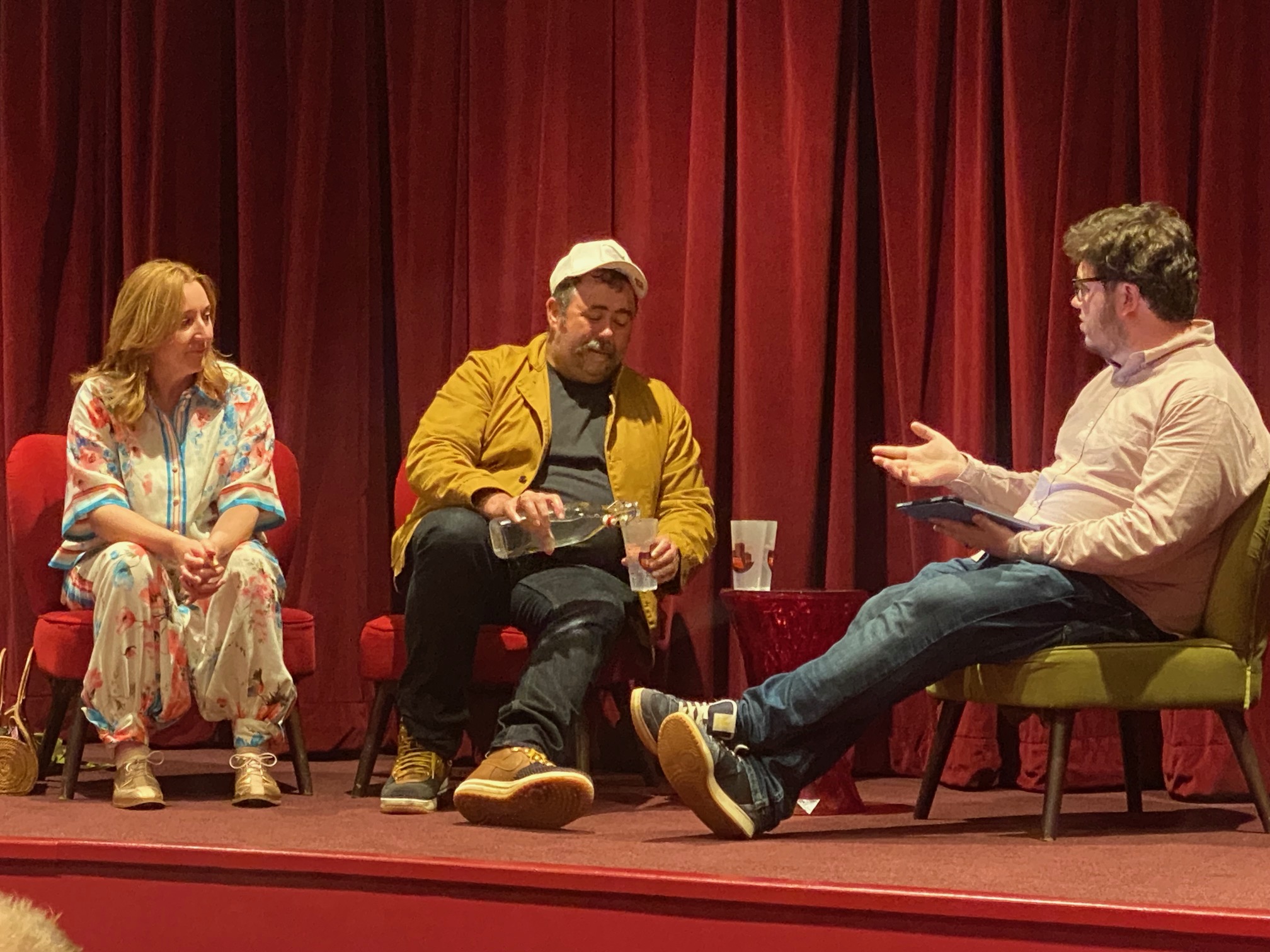
Baker explained that her research uncovered a lonely child who was desperate for affection. “He was such a lonely child, but a loving child,” she said, describing how Henry would constantly rescue injured animals and strays. As she pieced together his story, she came to see “a guy who, himself, was a wounded bird, but who was full of love and wanting love.”
For Jones, the challenge was finding the humanity behind the headlines. He recalled early concerns that audiences might struggle to sympathise with a character known for spending vast sums of money. However, he always saw something more complicated beneath the surface.
“I always saw the vulnerable child, the lost soul, the humanity in him.”
He argued that Henry’s story becomes compelling not because of his extravagance but because of the emotional wounds driving his behaviour.
“If it was just about a guy who spent money, we’re going to get bored very, very quickly. But if it was a guy who couldn’t stop doing it because he was unloved and neglected, and he was dying and running out of time, that’s a good character.”
The discussion also focused on the film’s star, Callum Scott Howells, whose performance received widespread praise. Jones described the role as requiring a rare combination of skills.
“He needed to have the charisma of a leading man and the fragility and range of a character actor.”
Baker was equally enthusiastic, saying that after seeing the finished film she could not imagine anyone else playing the role.
“This role is going to follow Callum around forever. He will always be Henry.”
As a first-time feature screenwriter, Baker also spoke movingly about finally seeing her work on the big screen after two decades of writing.
“I’ve been writing in a room on my own for about 20 years. Sitting in a dark room with people watching the thing I’ve been writing is an absolute kick. It’s the best drug there is.”
The conversation then shifted to Welsh filmmaking and the importance of telling Welsh stories. Baker spoke passionately about what she called “Brand Wales” and her lifelong frustration at not seeing Wales represented on screen.
“I could never understand as a child why I never saw Wales on TV.”
She described Welsh creativity as one of the nation’s greatest exports, adding “We’re legendary storytellers and lyrical poets, and we can share our stories with the world.”
Jones agreed and stressed that Welsh cinema’s success should not be viewed as a temporary trend. “It’s not a moment. It’s a movement.” He argued that the goal should be to create work that is locally rooted but internationally accessible.
“I want the feeling of making it to be local, but the product to be international.”
Several audience questions focused on Henry Paget himself. Asked what single question they would ask him if given the chance, Baker’s answer cut to the heart of the film.
“What do you want, Henry?”
She suggested that despite all the costumes, performances and public spectacle, what Henry truly wanted was love.
Jones expanded on that idea, reflecting on the difference between Henry’s public image and private life.
“We know that what’s inside is different to what’s outside, and that’s why it’s a human story we relate to.”
He concluded that he would simply want to know: “Was he happy? Did he feel love?”
The evening ended with discussion of the film’s reception across Wales. Jones shared stories of emotional audience reactions, including one young viewer who told him she had immediately bought tickets to see the film again with friends because she had found her “new comfort movie.”
For both filmmakers, those reactions confirmed that Madfabulous is about much more than historical biography. It is a story about identity, acceptance, loneliness and belonging. By bringing Henry Paget’s life to the screen, they have created a film that feels simultaneously rooted in Welsh history and remarkably relevant to modern audiences.
As Jones reflected during the discussion:
“Sometimes it’s more than a film. It’s an emotional happening that means something.”
Thanks to our reviewer FM

