For many years Chester Castle was a mysterious asset that was rarely accessible despite its great historical significance. It’s gates were unlocked in 2017 following work by the then MP Chris Matheson working alongside English Heritage. I had visited the Castle many times since then, but after seeing a Facebook post advertising a World War One event I went along with a friend.
Entering through the gates at the side of the majestic Crown Court there is little sense of the location’s history. You can see the Castle from walking the walls but I wonder what percentage of Cestrians have visited the previously unloved and neglected site. The Castle was founded by William the Conqueror in 1069 to enforce Norman rule in England. In the 13th century it was used as a strategic base for attacks into Wales. The 900 years of history is summed up very well in an informative and detailed site map which has been produced by the Castle volunteers.
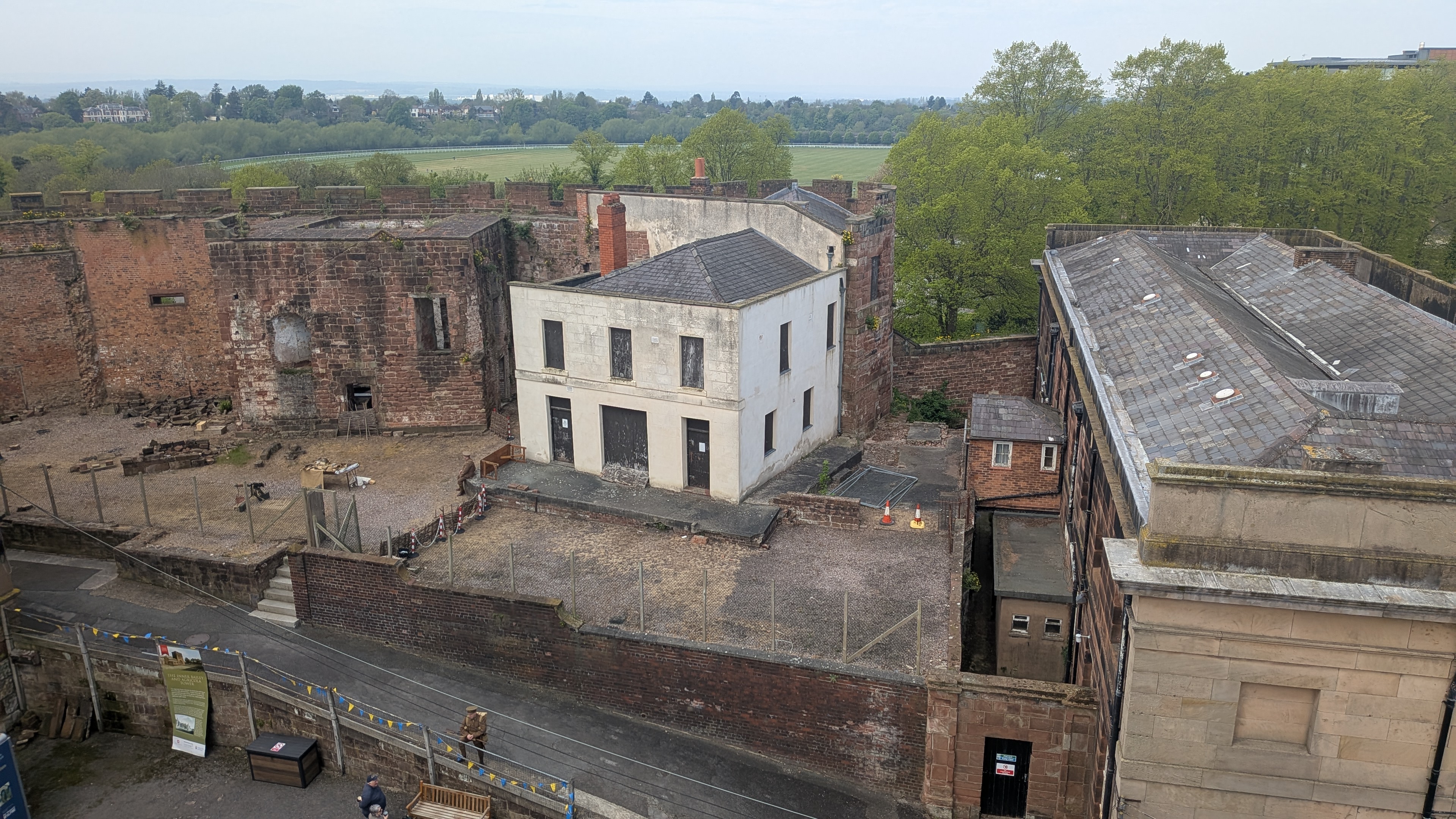
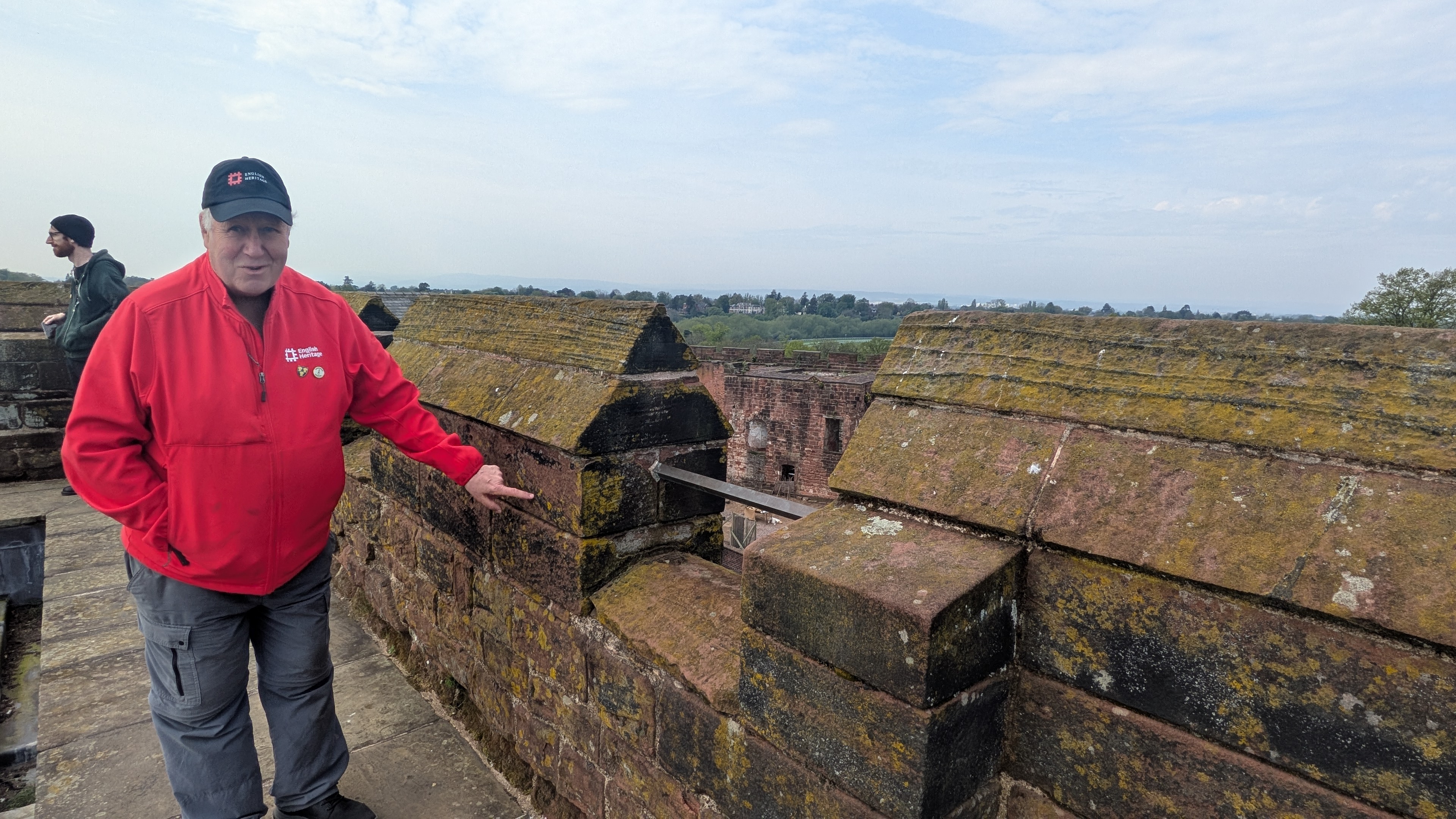
We climbed up the steps of the Agricola Tower (built 1210) , the original gateway to the Castle, pausing half way in the chapel to look at the surviving fragments of the medieval wall paintings there. At the top we are greeted by volunteer and historical re-enactor Mike Graham. Mike is a mine of knowledge and points out many points of interest. Enjoying the panoramic views across the city, Mike highlights the Castle’s perfect location with its proximity to the River Dee’s original location, and the Welsh border. Looking down onto the Castle’s varied buildings, he points out Frobisher’s House- where in 1696 a mint was established, and commanded by the astronomer Edmond Halley (of Halley’s comet fame). He tells me that the Architect pub was originally the home of Thomas Harrison, who designed the nearby Grosvenor Bridge and much of the later Castle buildings. Later he produces an original coin from the reign of William III. These and other historical anecdotes are worth the trip alone.
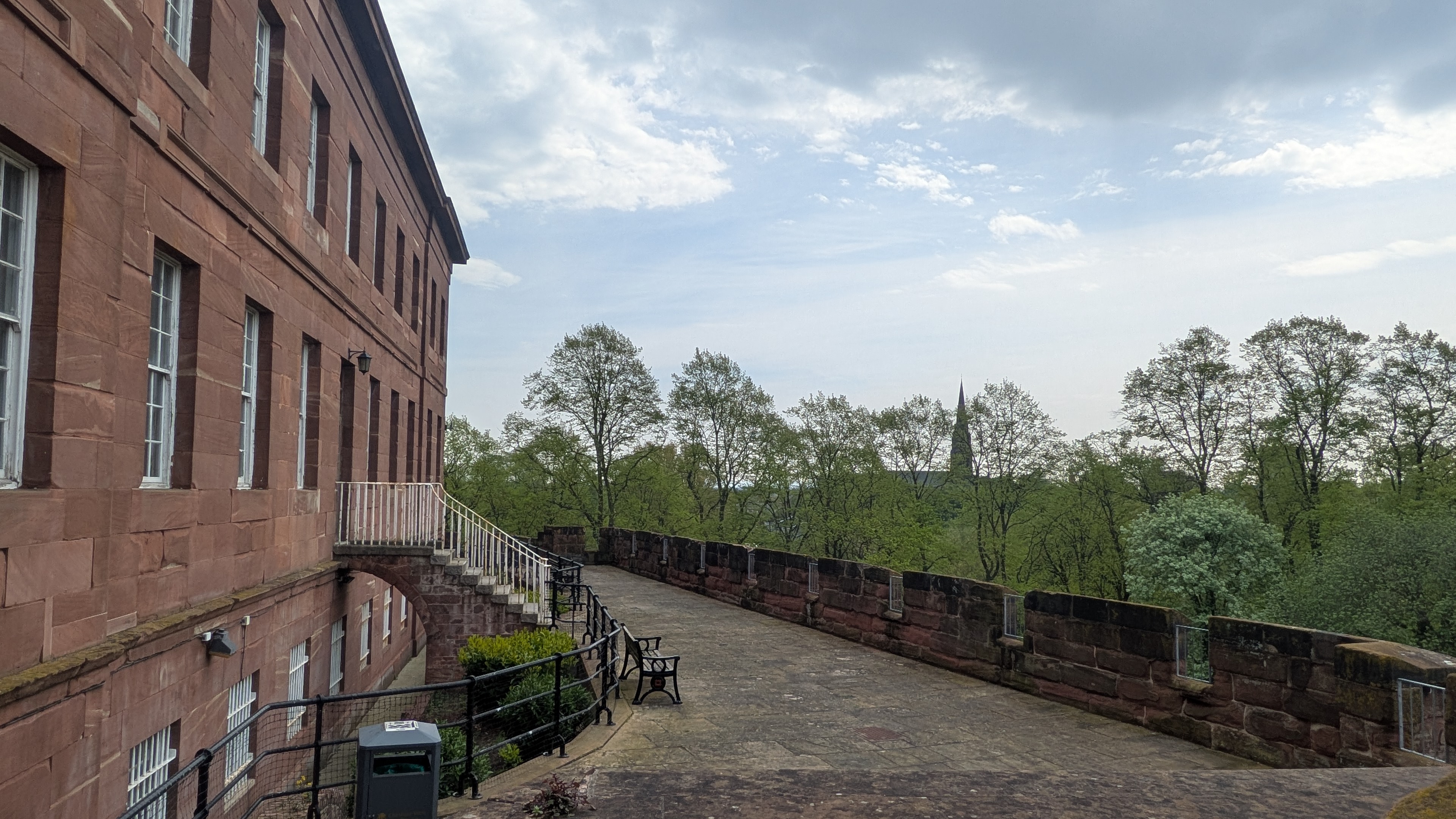
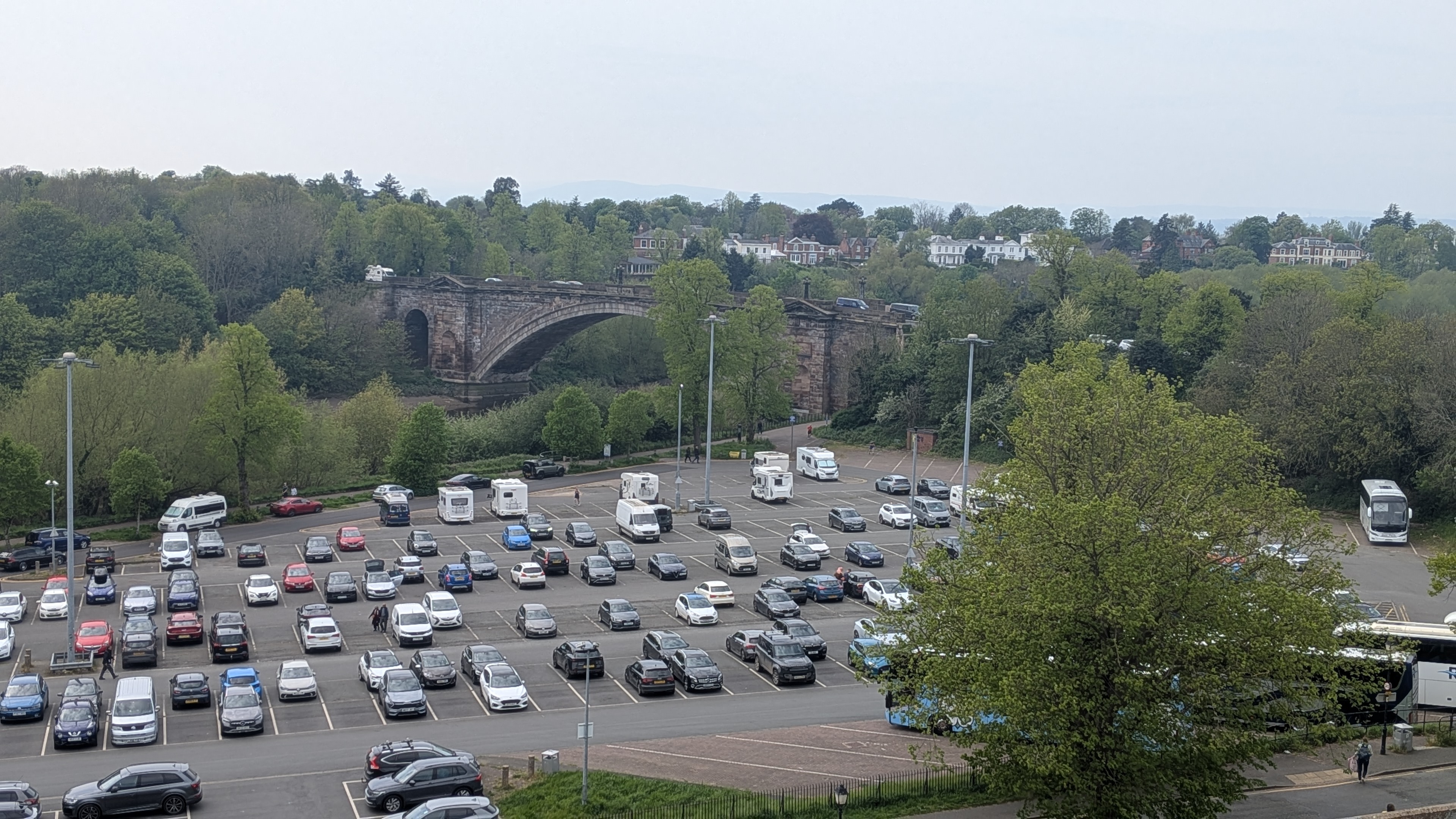
Back down to earth, walking through the courtyard and around the battlements, the vast untapped potential of the site becomes clear. Napier House (built 1830) is empty, at one time considered for a hotel conversion, would be well placed for a museum or interactive tourist attraction, perhaps similar to the fantastic York Castle Museum. Access problems and varied ownership of the site have so far prevented any developments. The battlement promenade gives a great view of the Grosvenor Bridge and the car park below. “Remember when that was a Covid testing site?” I say to my friend, reflecting on more recent turbulent times.
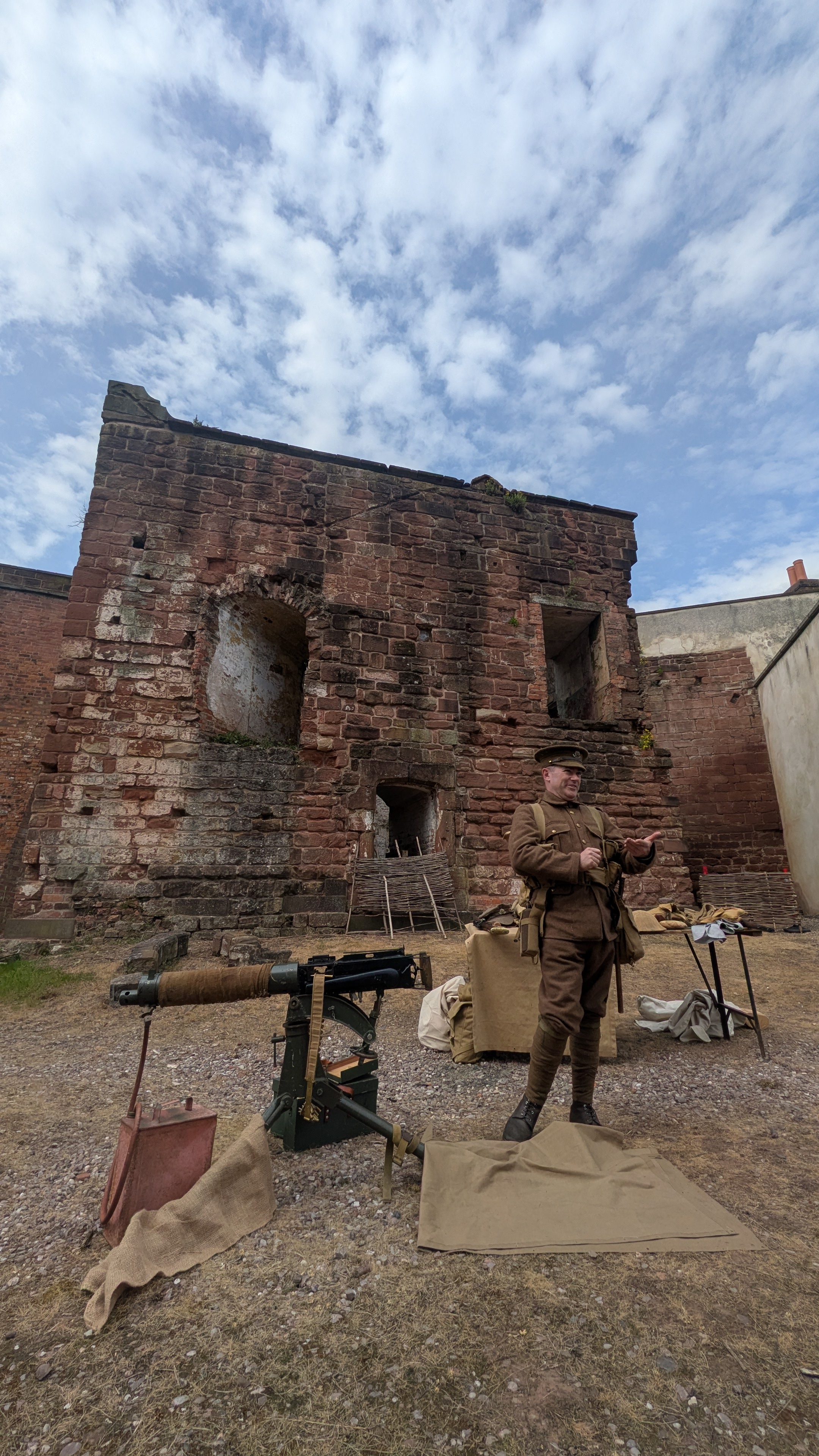
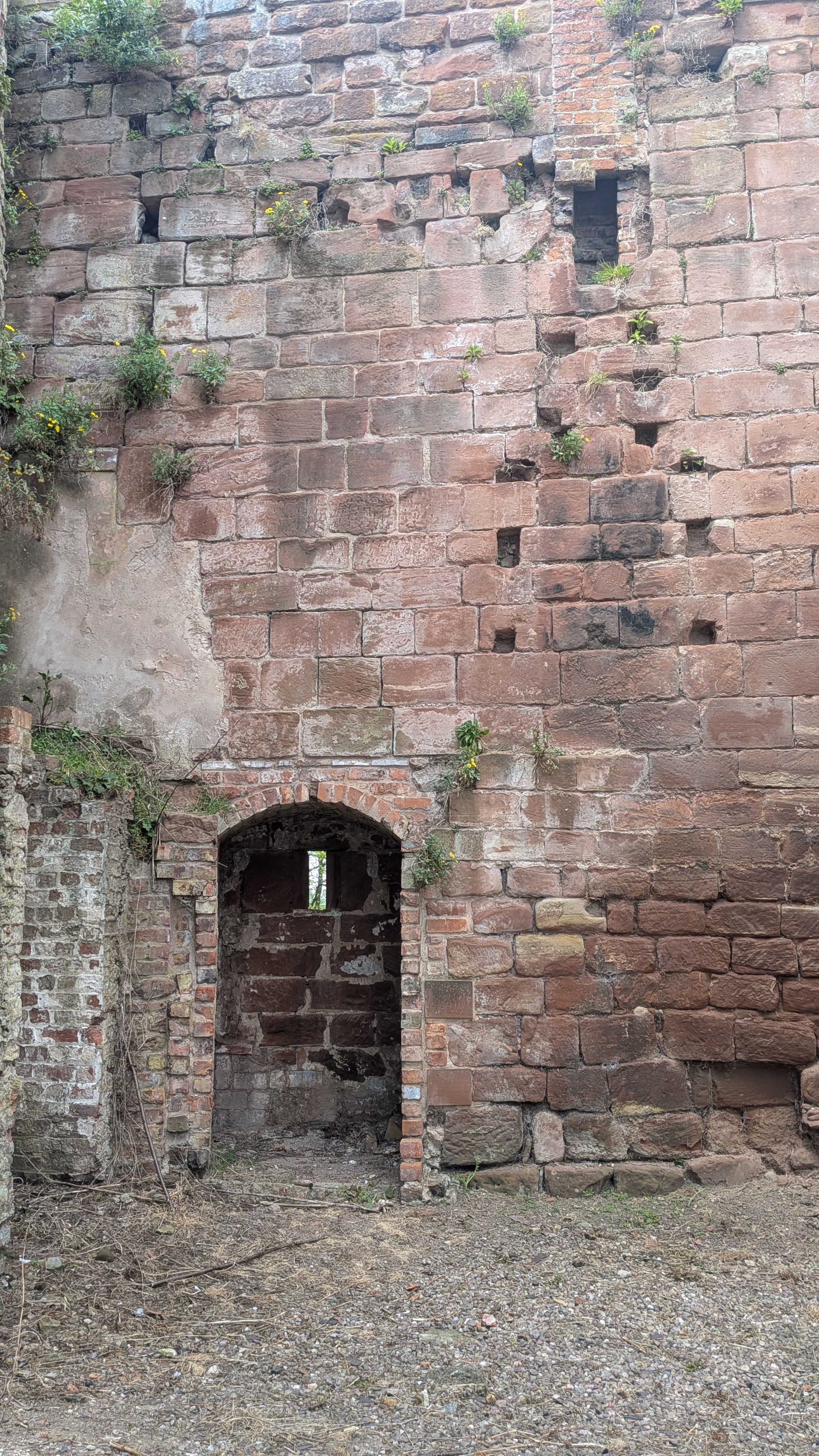
In front of the Flag Tower (built 1159) a costumed volunteer is sharing his knowledge of machine guns. Adjacent to this is the remains of a bake house and a wall marked with musket damage. A bricked up doorway suggests the legacy of the varied layers of history we are walking through;
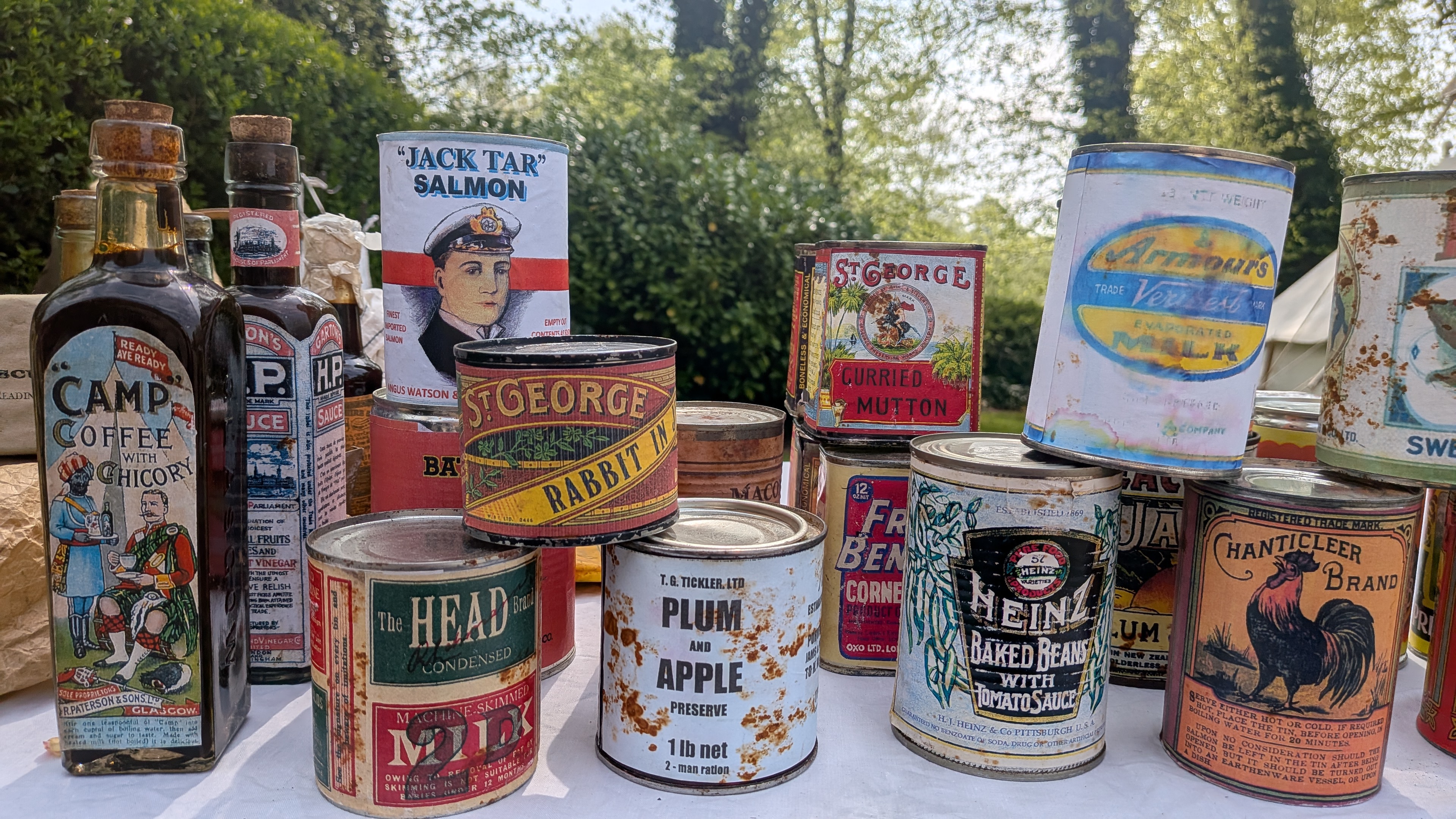
“Curry once a week in the British army!” says another re-enactor. “Its back from the army in India, the influence. I was talking to an Indian lady earlier, her grandfather served on the Western Front. 15,000 Indian troops, imagine coming from the Punjab and you’re in the middle of Flanders in the winter” He also talks of the role played by the 11th Cheshire Regiment in The War. “They used to say it took 2 years to make them, 2 minutes to destroy them” In one early battle there were 332 casualties in 2 minutes ,he says.
After this we travel down the atmospheric steps of the Sally Port, a secure entrance from the inner ward to the outside. Here we find an army camp including a tented kitchen.
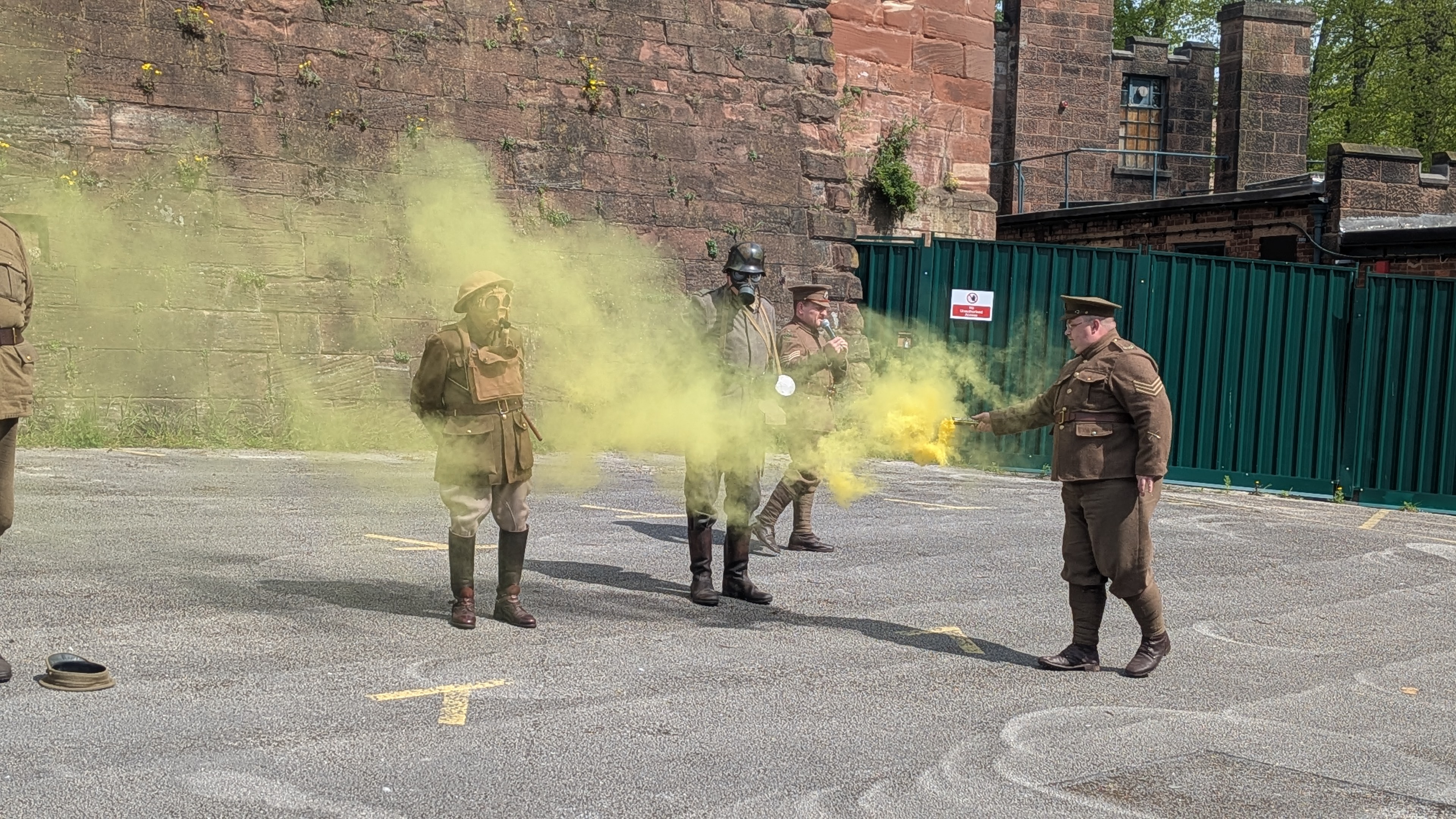
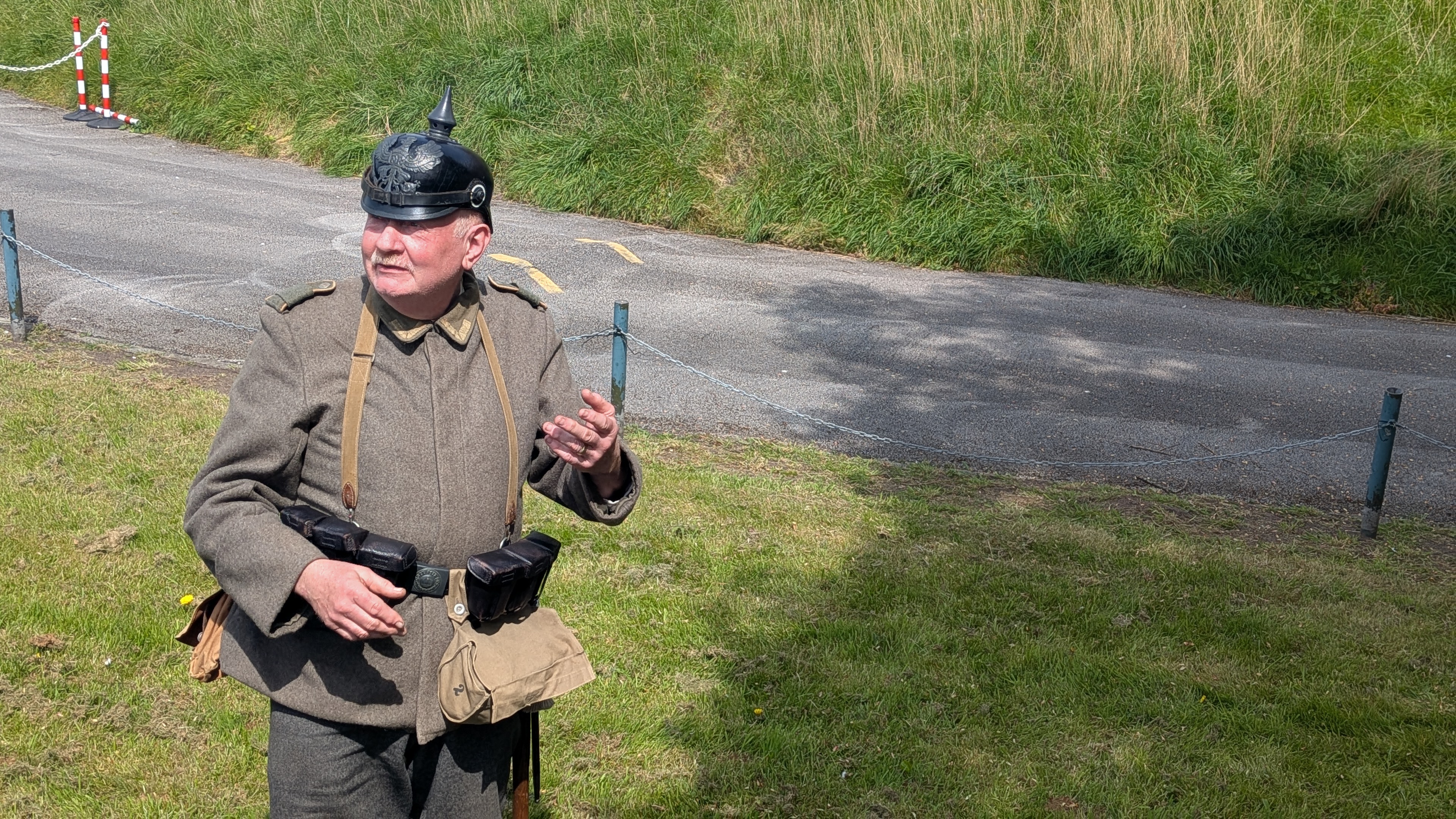
Everyone gathers for a talk about the use of gas and chemical warfare and the evolution of gas mask technology. The early gas masks are ghoulish, and a friendly German soldier provides an insight into the other side of the conflict. Looing up to castle battlements, the demonstrator points up at Napier House where 38,000 men and older boys enlisted and had their medicals.
After making a donation we left the Castle and stepped back into the modern world, enriched by our multiple glimpses into the past. With its centuries of history on show, its clear that Chester should be shouting more about this site, and that it should be promoted and championed more. Thanks to the volunteers it is no longer the underused and unappreciated site of previous decades and I’m pleased to hear that new interpretation panels are being installed. If you haven’t been to the Castle before , please go and check in on centuries of Chester’s history.
The Castle is open at weekends (free entry) 11-3 April to October.
Agricola Tower and Castle Walls Chester Castle | English Heritage
 The Chester blog